Venomous · North Carolina

Copperhead

Agkistrodon contortrix

North Carolina’s most commonly encountered venomous snake—a heavy-bodied pit viper with a coppery head and dark hourglass crossbands. Often found near woodland edges, rock piles, and stream margins, it is usually still when noticed and best understood from a distance.

Venomous. Keep your distance and do not handle. This page is a field guide, not a definitive identification service.

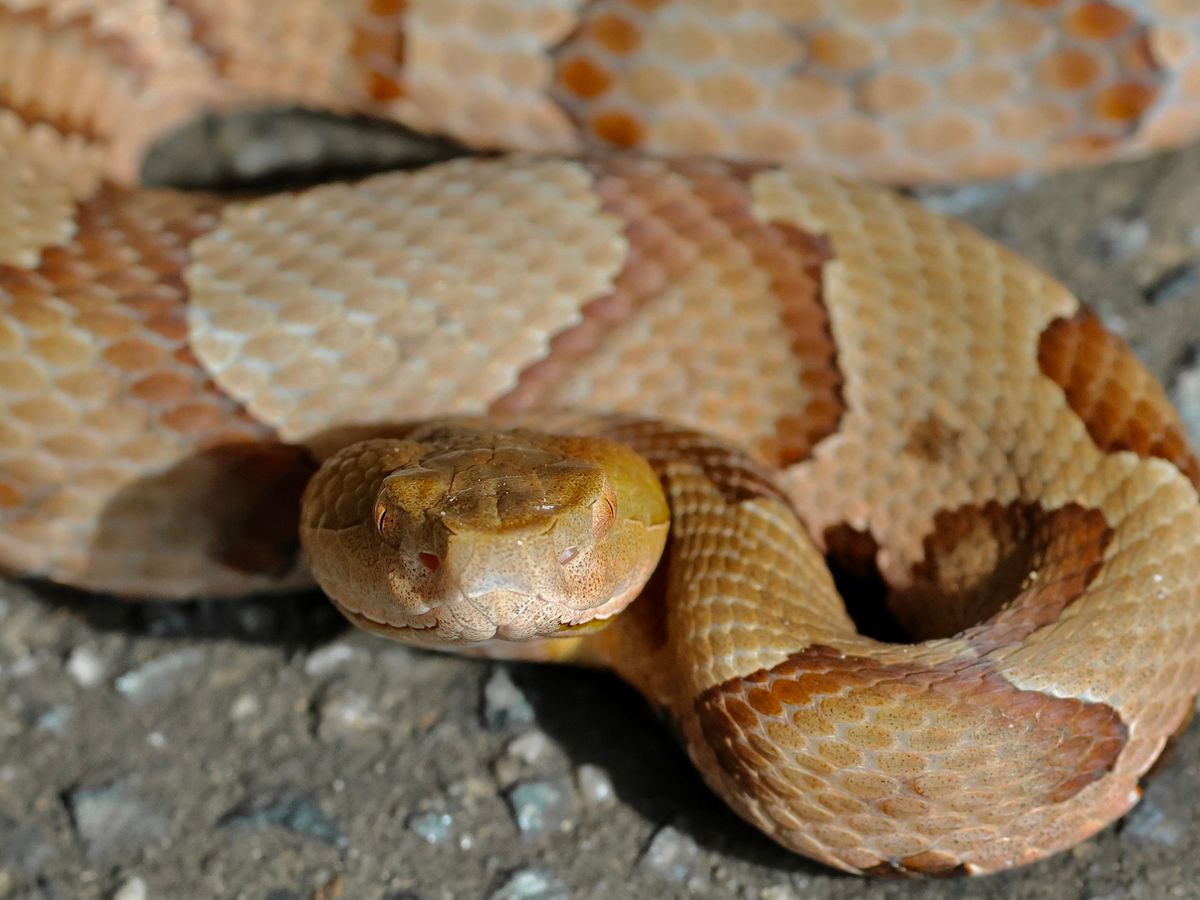
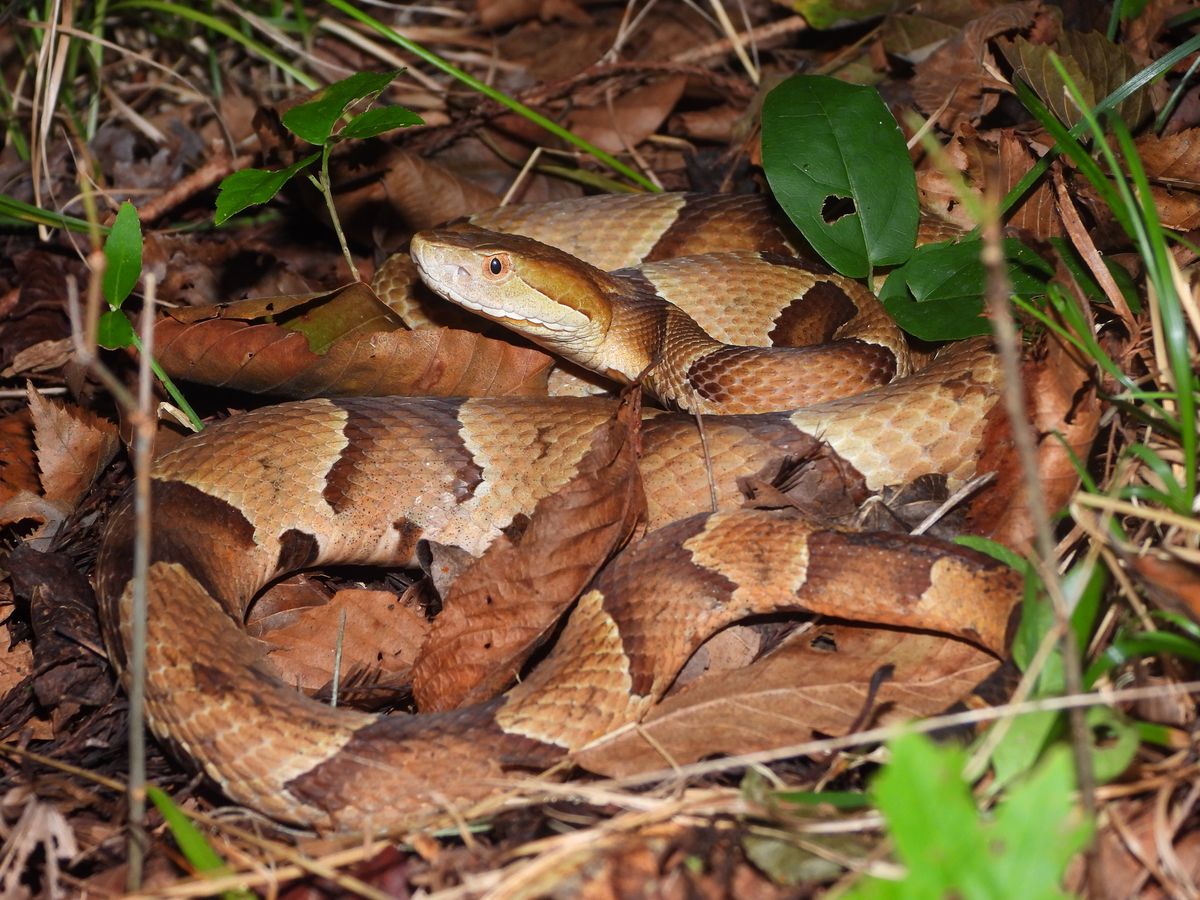
Copperhead (Agkistrodon contortrix)
Photo by Yinan Li · CC BY-NC 4.0

At a glance

Size Usually 24-36 inches.
North Carolina range Mountains, Piedmont, Coastal Plain
Habitat woodland, suburban edges, rocky slopes
Diet Mostly mice and other small mammals; also frogs, lizards, birds, insects, and small snakes.
Pattern hourglass bands
Venomous Yes

Recognize it by

  • Copper-colored head that is distinctly broader than the neck
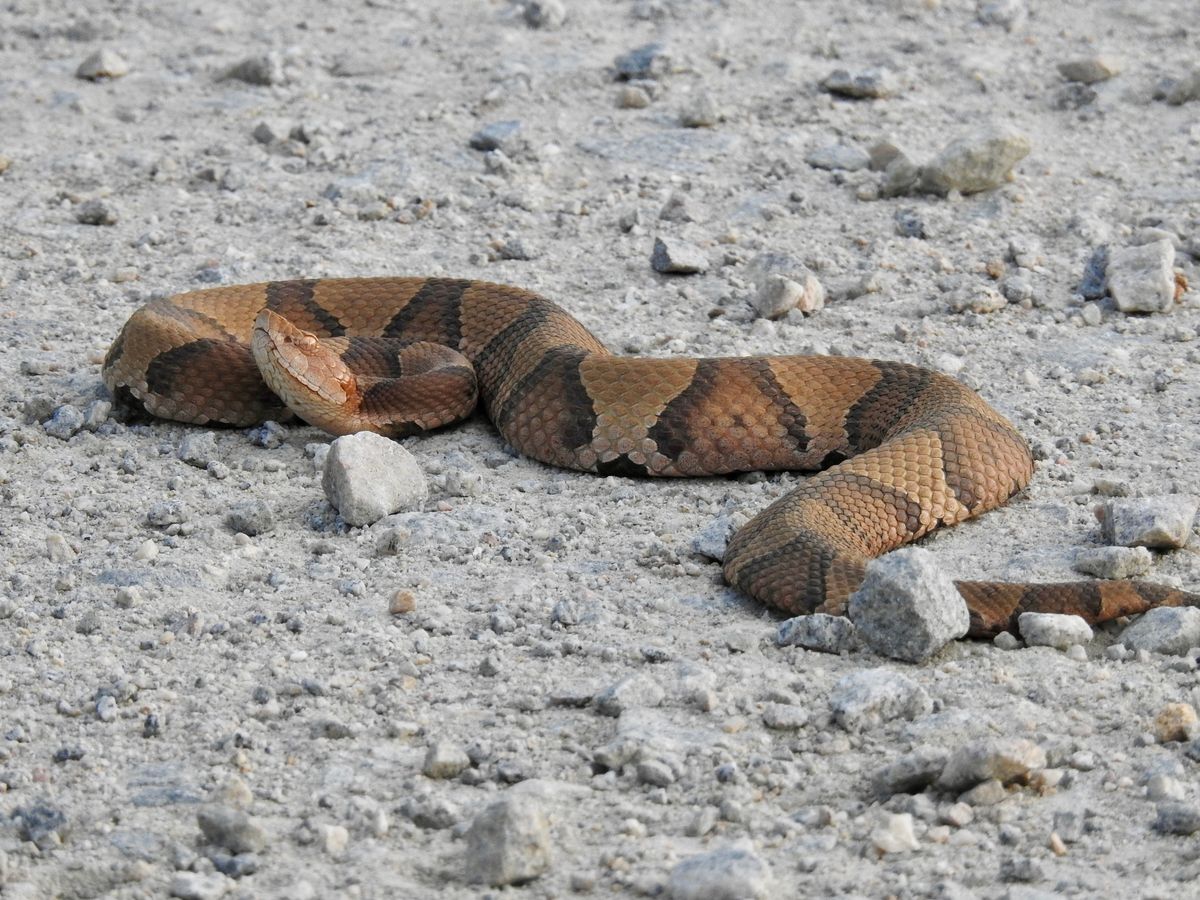
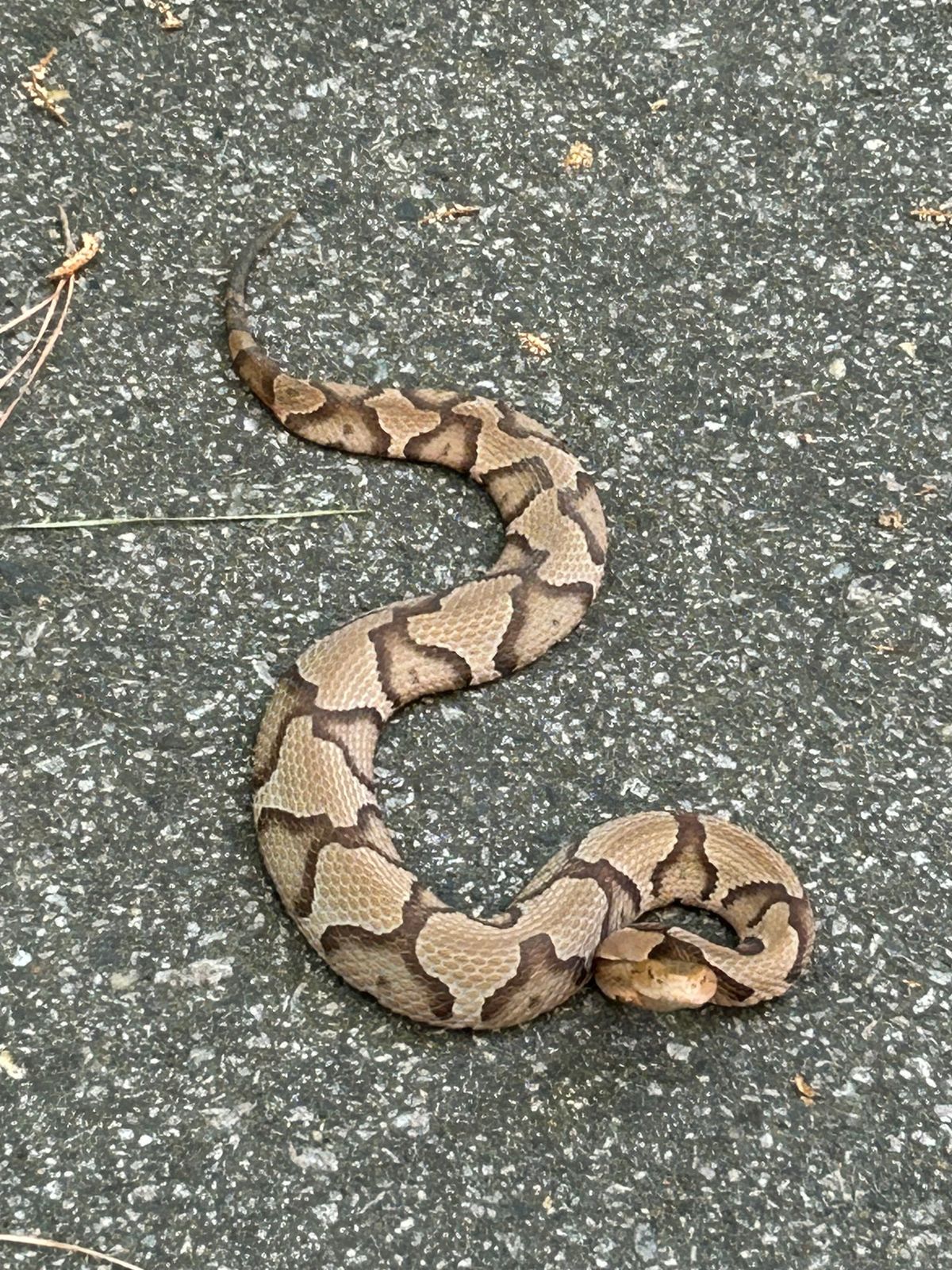
  • Dark hourglass or bow-tie crossbands that are narrow across the spine and wider on the sides
  • Heavy body and keeled scales that look dull rather than glossy
  • Statewide range, often near cover at the edge of woods or yards

How to identify it

No single trait is enough on its own. Build a copperhead identification from several independent marks, and leave room for uncertainty when the view is brief.

  • Pattern: Crossbands form hourglasses or bow ties—narrow on the midline of the back and broader on the sides. From above, the pattern can look like a series of saddles; from the side, the wide lower part of each band is often the clearest cue.
  • Head and face: The head is copper, tan, or pinkish brown and wider than the neck. Dark lines often run from the eye toward the jaw. Like other pit vipers, it has a heat-sensing pit between eye and nostril, but that detail is easy to miss at a safe distance.
  • Body and scales: Stocky build with keeled (ridged) scales that give a matte look. Adults are usually about two to three feet long.
  • Life stage: Young copperheads share the adult pattern and often have a bright yellow or greenish tail tip used as a lure. That tip fades with age.
  • What not to rely on alone: Head shape can be mimicked by defensive flattening in harmless snakes, and color varies from bright copper to grayish brown.

Closest look-alikes

These are the North Carolina snakes people most often confuse with Copperhead. Compare several traits; a single cue is rarely enough.

Common Watersnake

Watersnakes often get the blame for copperheads near water. Their dark marks are usually wider on the back and narrower on the sides—the reverse of a copperhead’s hourglass. They also climb banks and swim freely; copperheads are less tied to open water.

Eastern Ratsnake

Juvenile ratsnakes are gray with dark blotches and are a frequent copperhead mix-up. Ratsnake blotches are more rectangular or saddle-like and do not form clean hourglasses that widen strongly on the sides. Adults darken to black and look nothing like copperheads.

Corn Snake

Corn snakes have warmer reds and oranges with blotches outlined in black, a more slender build, and a spearpoint mark on the head. Their pattern is blotches, not copperhead hourglasses.

Behavior and natural history

Copperheads are primarily ambush hunters. A still snake along a log, leaf litter edge, or rock line may be waiting for prey rather than “posing.” Stillness can also mean thermoregulating, digesting, or simply remaining undetected.

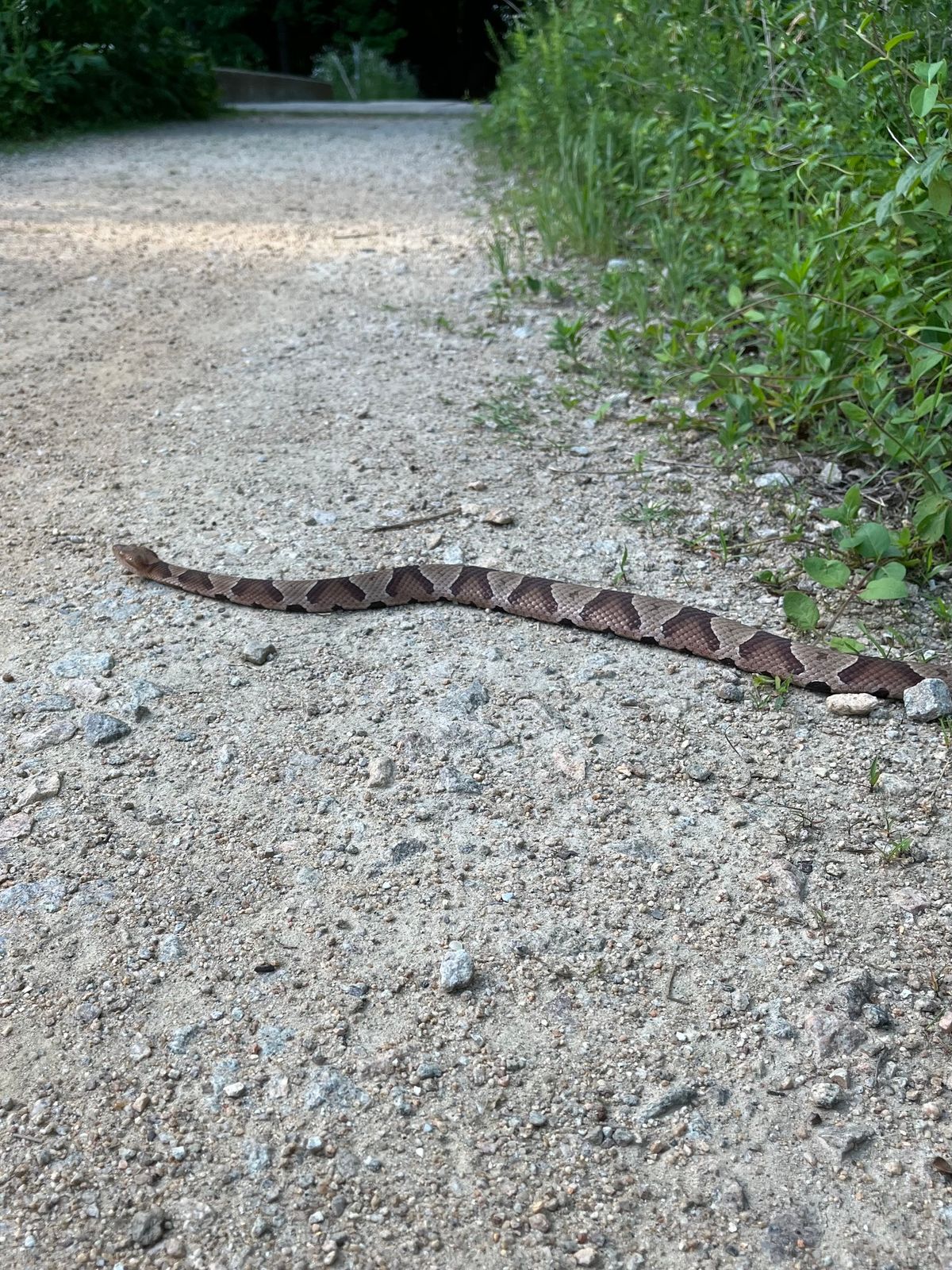
They are most often noticed from late spring through early fall, including mild evenings. After cool nights they may use sun-warmed edges, boards, or pavement margins—then slip back under cover.

When disturbed, a copperhead may freeze, slowly move toward cover, or vibrate its tail in dry leaves. It is venomous; the practical field response is distance and a clear view, not a closer look.

Where to look in North Carolina

Found across the Mountains, Piedmont, and Coastal Plain, but generally absent from the Outer Banks. Expect it where cover and prey meet: woodland edges, rocky slopes, creek corridors, brush piles, and suburban lots that still have leaf litter or stacked wood.

Places that fit

  • Mountain and Piedmont woods with rocky outcrops or south-facing edges
  • Stream margins and bottomland edges with nearby cover
  • Yard edges that grade into woods rather than open lawn alone
North Carolina regional range for Copperhead Highlighted official regions: Mountains, Piedmont, Coastal Plain. Regional guidance is not a county-level occurrence record. Mountains Piedmont Coastal Plain

Regional maps show broad physiographic provinces, not county-level records.