North American Racer
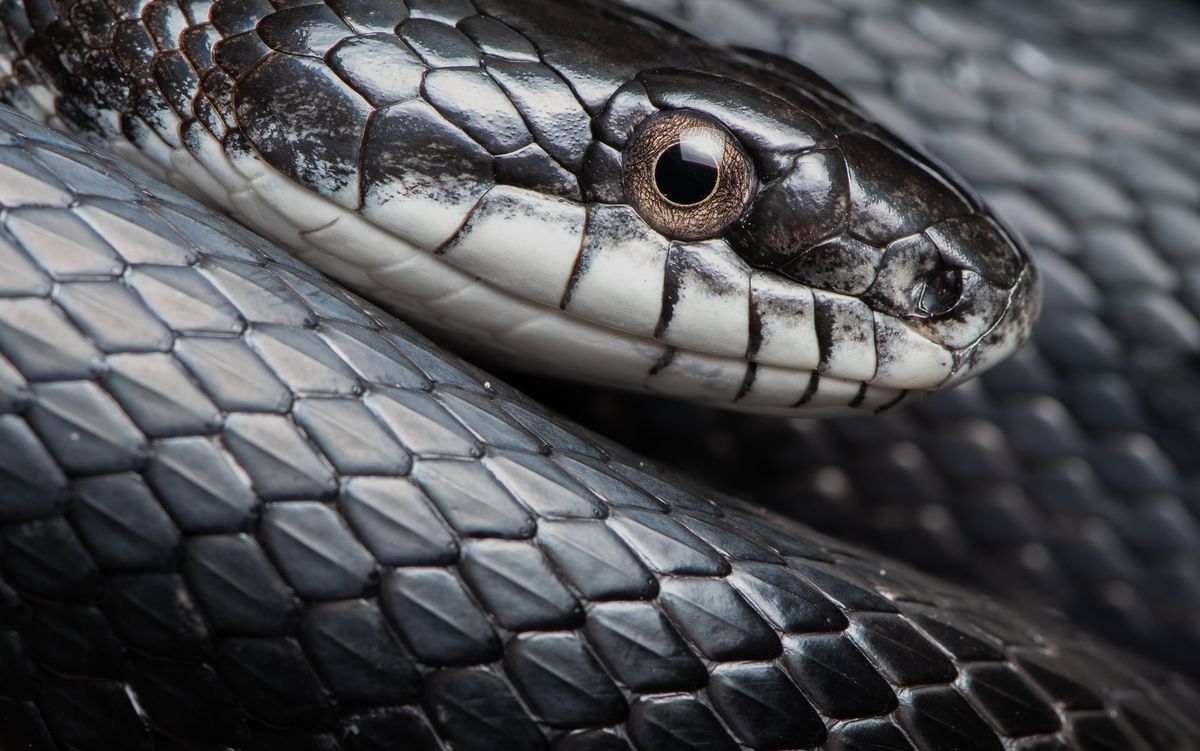
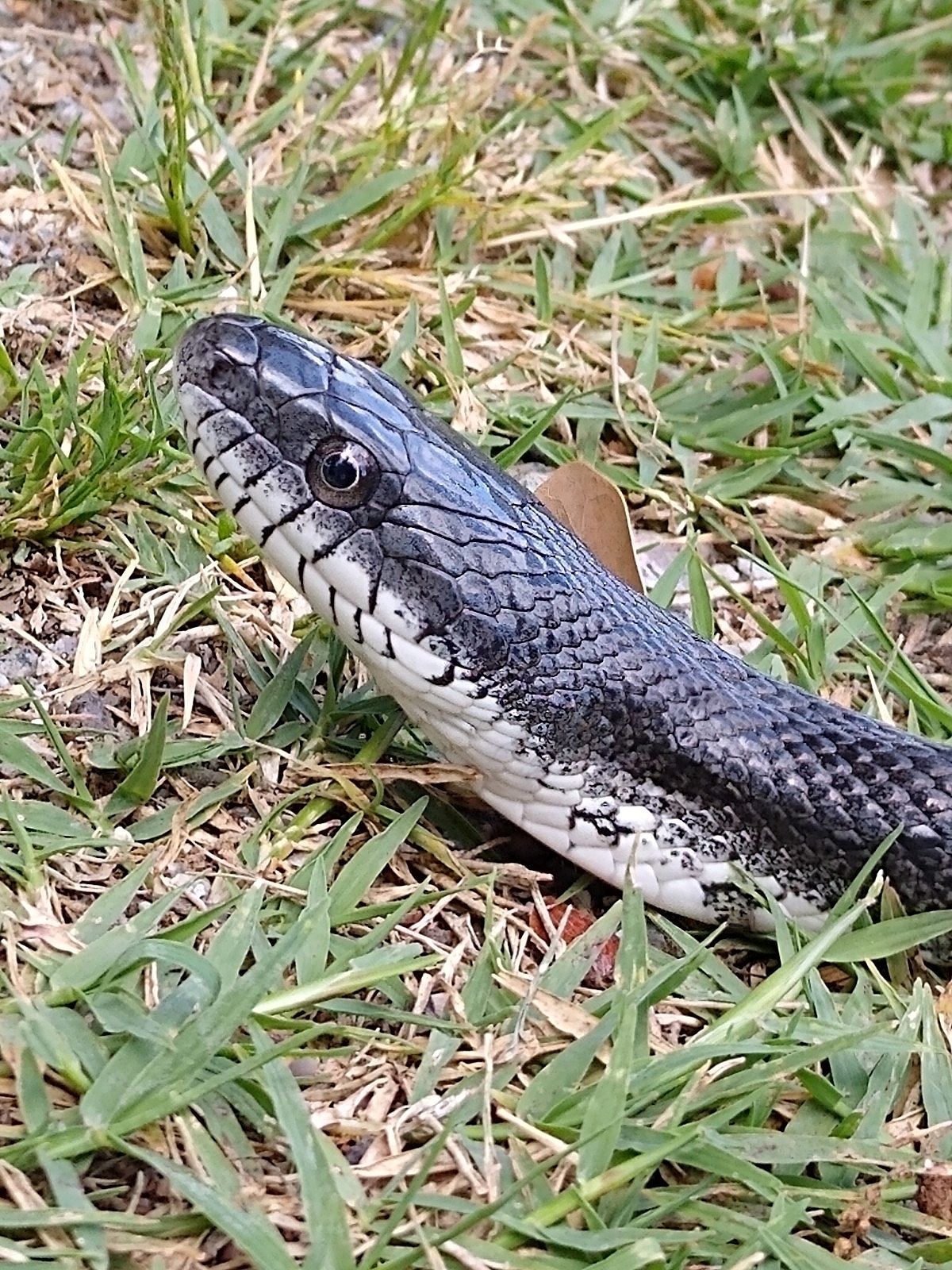
Racers are slimmer, faster, and usually matte black with a clean white or gray chin. They hunt actively on the ground more than ratsnakes and lack the ratsnake’s heavier climbing body.
 Snakes of NC
Harmless · North Carolina
Pantherophis alleghaniensis
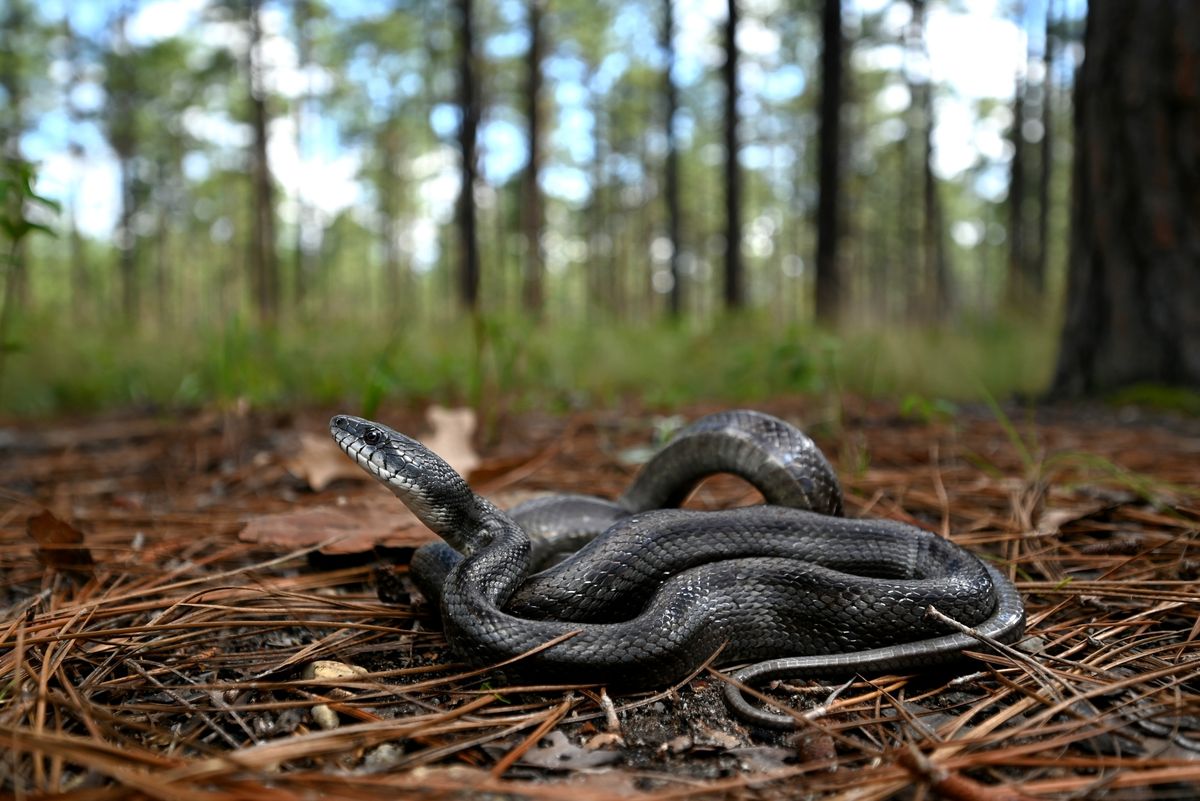
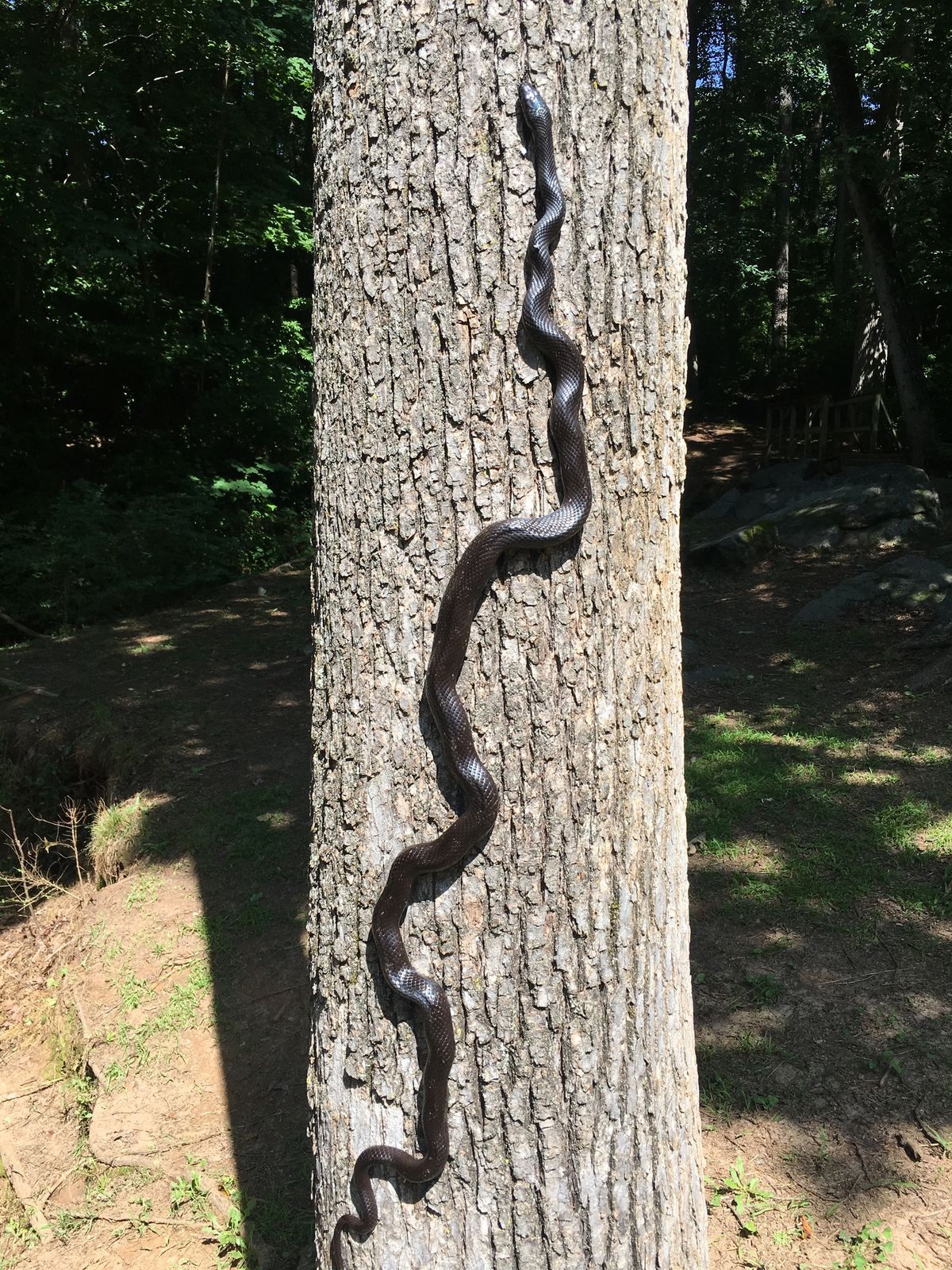
A large, skilled climber often called a “black snake” as an adult. Juveniles look completely different—gray with dark blotches—and that young pattern is a common source of copperhead confusion across North Carolina.
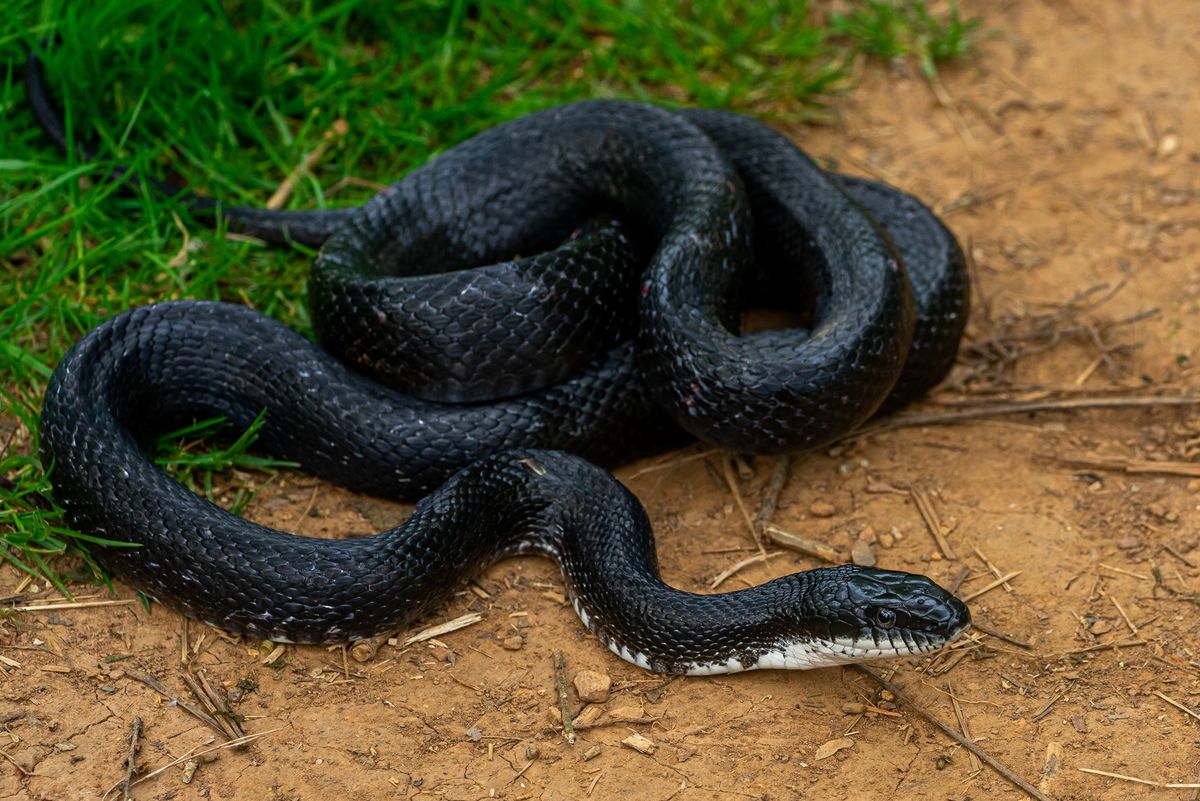
Treat adult and juvenile ratsnakes almost as two field problems. Age changes the look more dramatically than in most North Carolina snakes.
These are the North Carolina snakes people most often confuse with Eastern Ratsnake. Compare several traits; a single cue is rarely enough.
Racers are slimmer, faster, and usually matte black with a clean white or gray chin. They hunt actively on the ground more than ratsnakes and lack the ratsnake’s heavier climbing body.
Young ratsnakes are the copperhead look-alike most people meet in yards. Focus on band shape: copperhead hourglasses narrow on the spine; ratsnake blotches do not form that side-heavy hourglass.
Eastern kingsnakes are dark with chain-like light crossbands, not a solid black adult ratsnake look. They also stay lower to the ground more often.
Ratsnakes are active hunters and climbers. Seeing one high on a trunk, in a hayloft, or along a roofline fits the species far better than it fits most heavy-bodied water snakes or copperheads.
They eat rodents, birds, and eggs, which draws them to farms, barns, and wooded suburbs. A snake disappearing into a cavity or rafter is behaving like a ratsnake.
When threatened they may freeze, flee, musk, or occasionally rattle the tail in dry leaves—another reason pattern and build matter more than a single defensive pose.
Common statewide in forests, farmland, and wooded neighborhoods. Anywhere with trees, outbuildings, or rodent prey is plausible ratsnake habitat.
Regional maps show broad physiographic provinces, not county-level records.
Use the gallery to check pattern, body shape, and context—not just overall color.