Copperhead Venomous
Compare band shape first: copperhead hourglasses are narrow on the back and wide on the sides. Watersnake marks usually do the opposite. Copperheads also lack the watersnake’s constant attachment to open water.
 Snakes of NC
Harmless · North Carolina
Nerodia sipedon
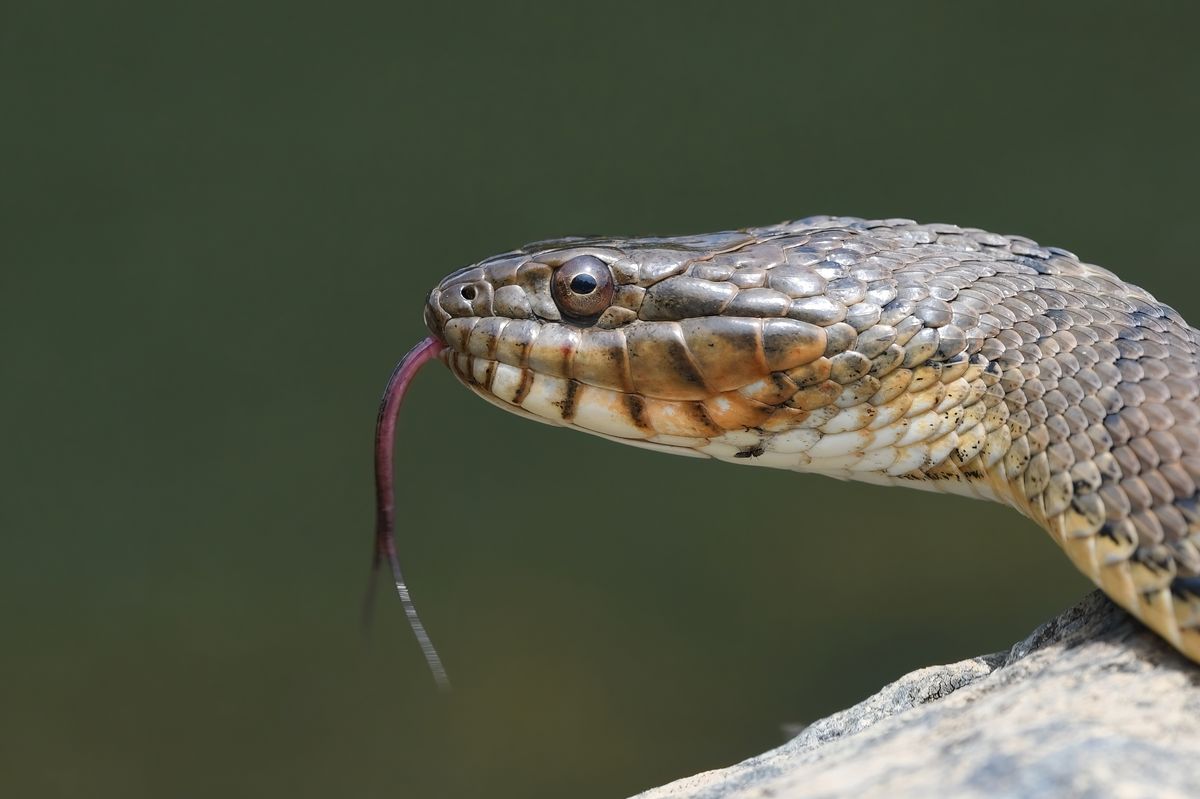
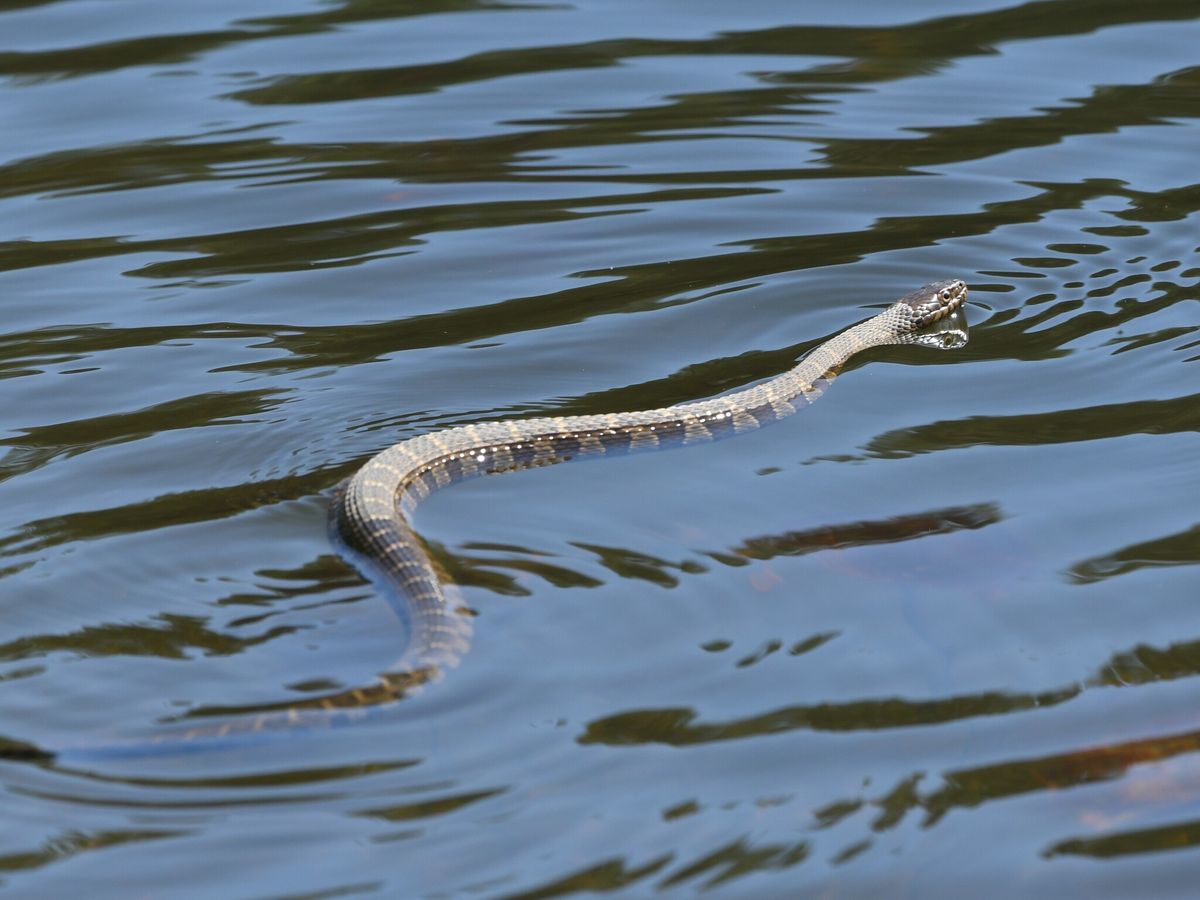
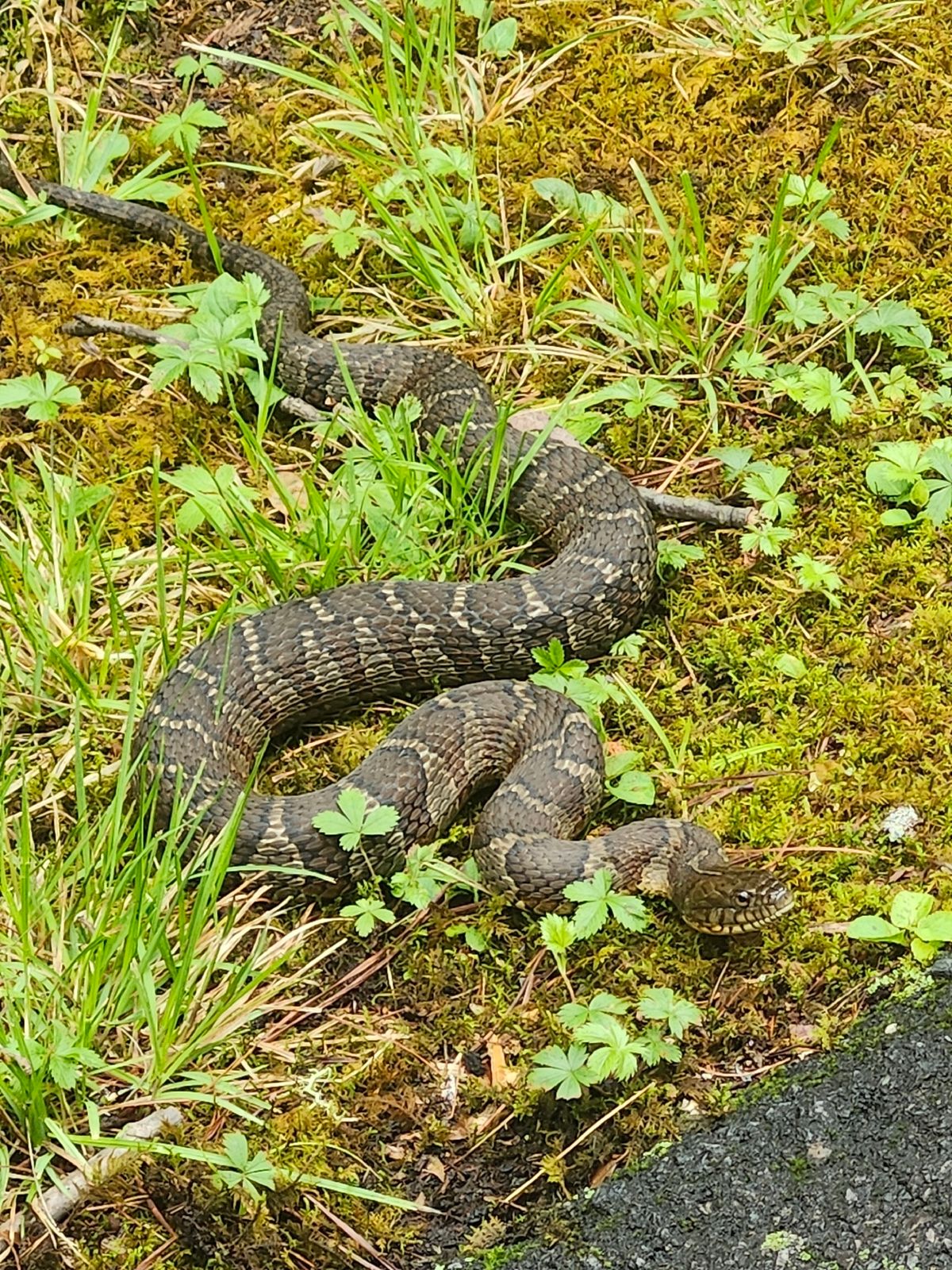
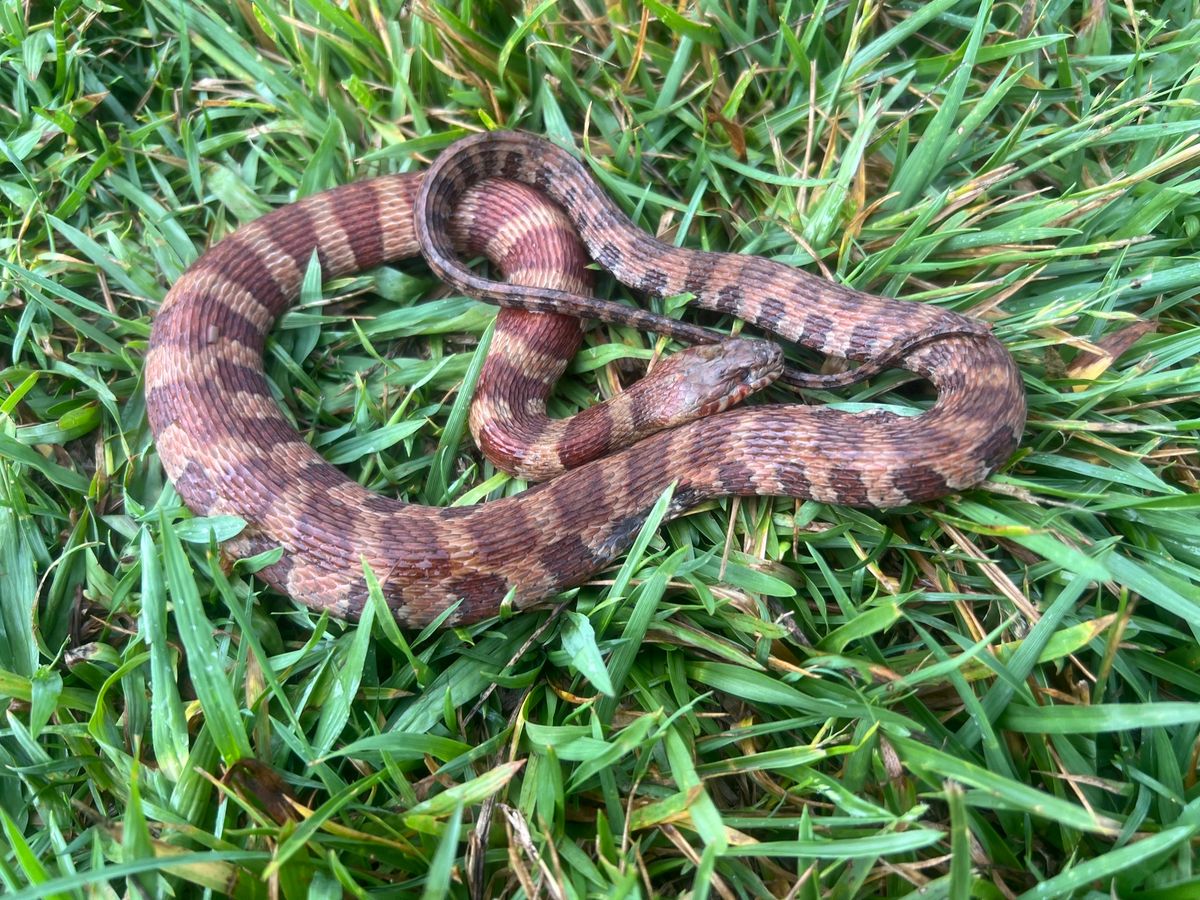
A heavy-bodied, nonvenomous watersnake of rivers, ponds, and lake edges in the Mountains and Piedmont. Variable bands and blotches, a fondness for basking on banks, and defensive bluffing make it one of the snakes most often mistaken for a cottonmouth or copperhead.
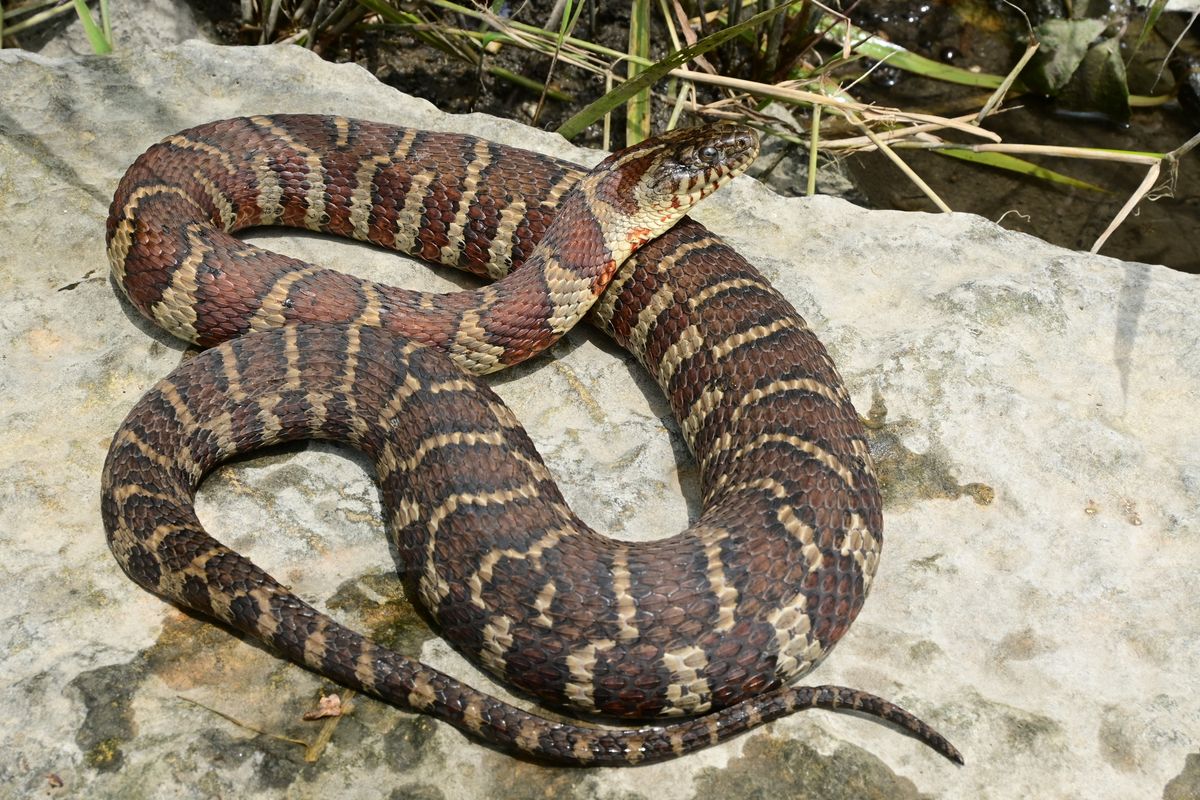
Watersnake color and contrast change with age and wetness. Use pattern geometry, habitat, and behavior together.
These are the North Carolina snakes people most often confuse with Common Watersnake. Compare several traits; a single cue is rarely enough.
Compare band shape first: copperhead hourglasses are narrow on the back and wide on the sides. Watersnake marks usually do the opposite. Copperheads also lack the watersnake’s constant attachment to open water.
Cottonmouths are venomous and mainly Coastal Plain in North Carolina. They often swim with the body higher on the water and show a blockier dark head, but range and careful pattern comparison matter more than a single swimming pose.
Banded watersnakes replace common watersnakes toward the east. They tend to keep bolder crossbands along more of the body. Use range and overall pattern continuity when both are possible.
These snakes hunt fish and amphibians and may sit motionless at the waterline or cruise shallows. A coiled snake on a log above a creek is often working habitat, not seeking people.
When cornered they can flatten the body, strike with a closed or open mouth, and musk. That bluff is convincing and drives many false cottonmouth reports.
Basking peaks on cool sunny days. In hot weather they may be more aquatic or tucked under bank cover.
Common along rivers, streams, ponds, and lakes in the Mountains and Piedmont. Look for sunny banks with nearby deep or vegetated water and places to haul out.
Regional maps show broad physiographic provinces, not county-level records.
Use the gallery to check pattern, body shape, and context—not just overall color.