Red-bellied Snake
Red-bellied snakes are also small and can show a warm belly, but they usually lack the bold light neck ring and often have faint dorsal stripes or a lighter neck area without a clean ring.
 Snakes of NC
Harmless · North Carolina
Diadophis punctatus
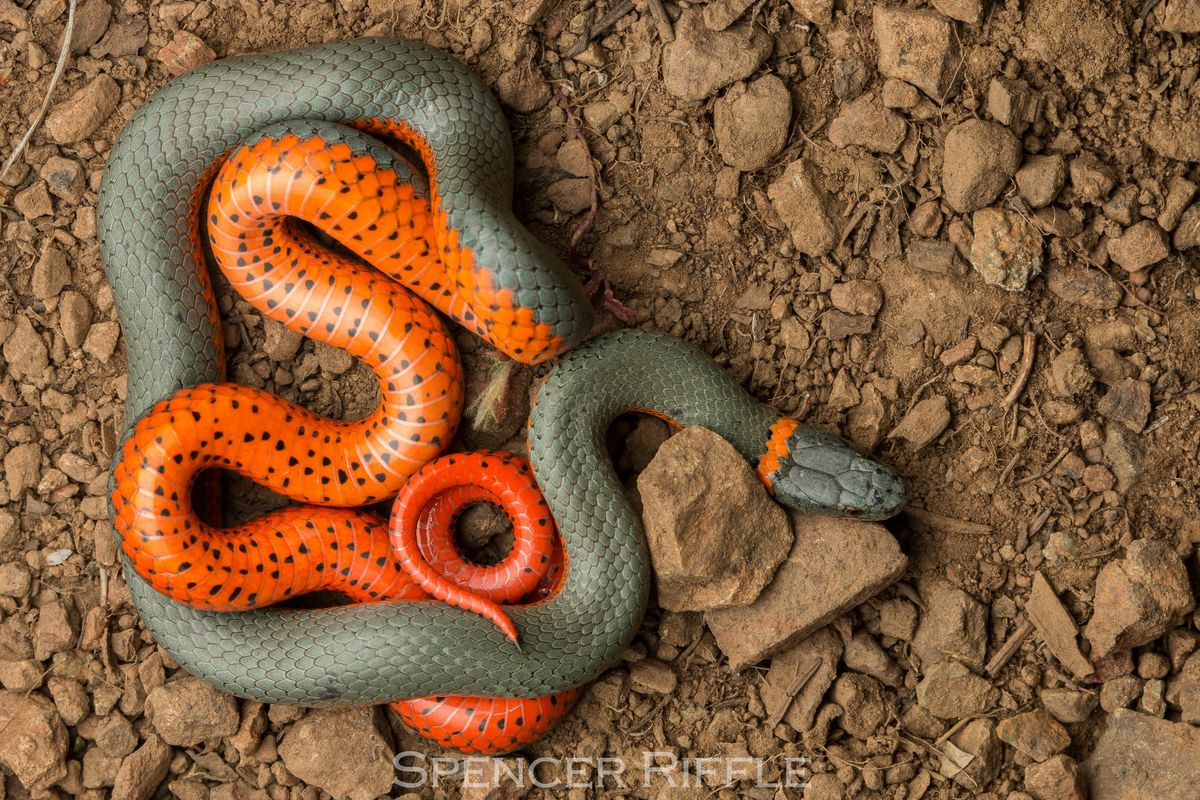
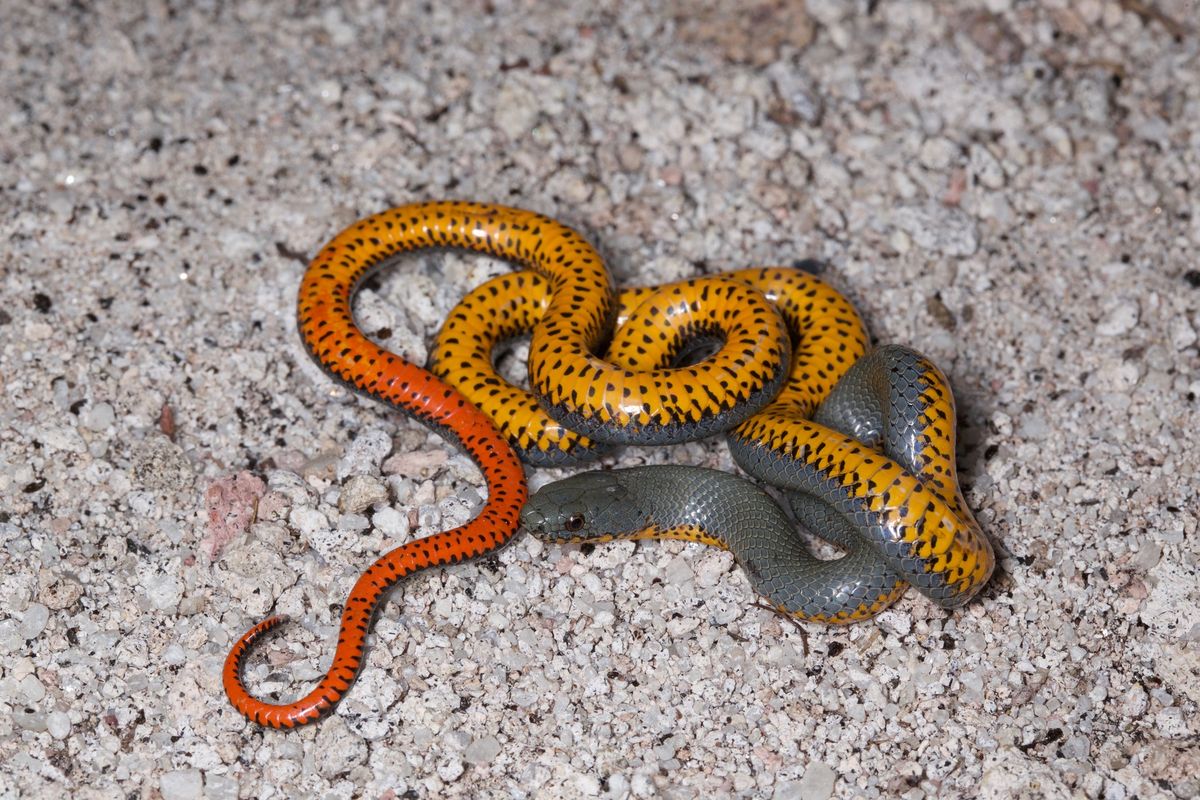
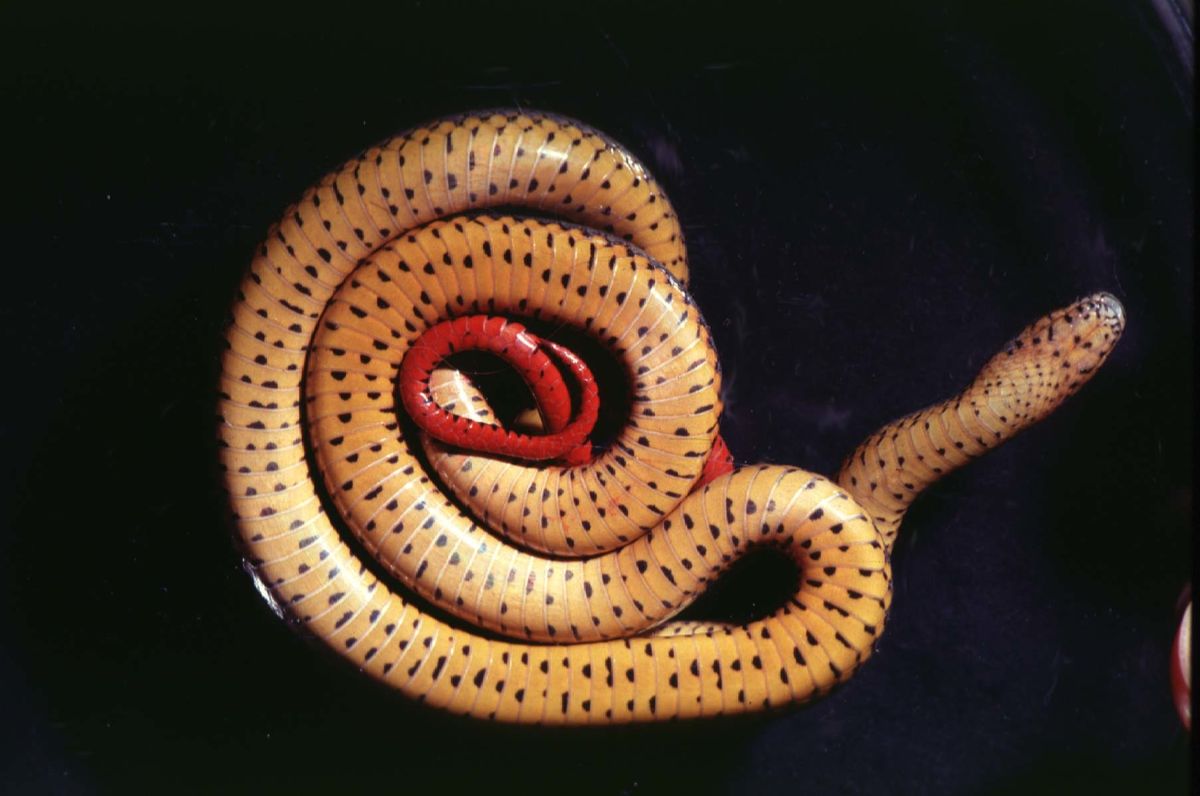
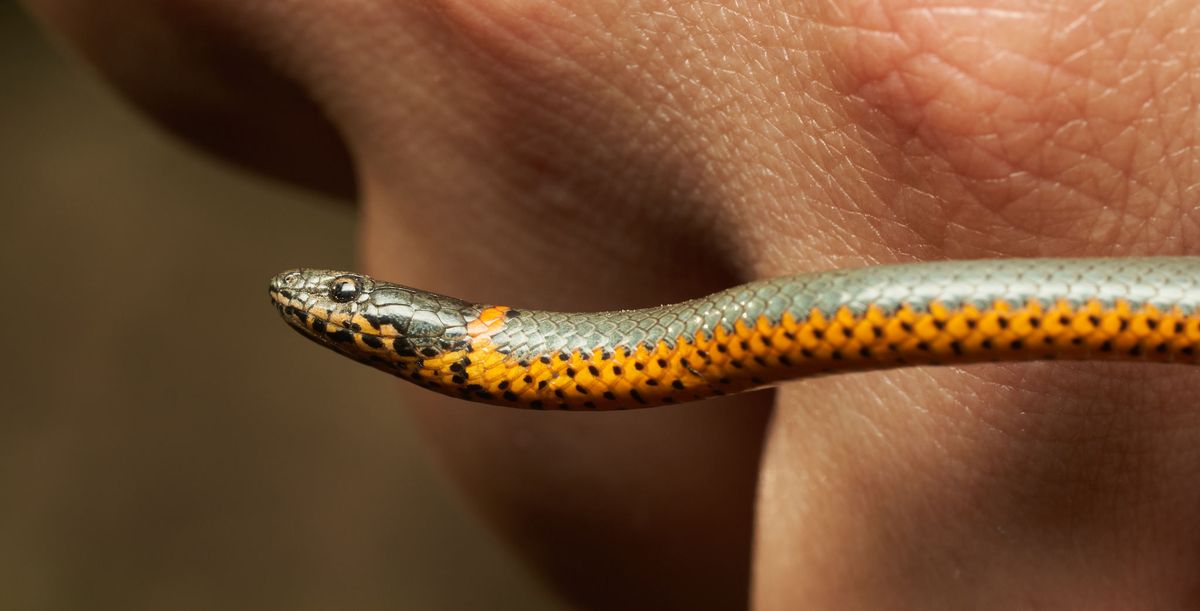
A small, secretive woodland snake with a dark back, a neat yellow or orange neck ring, and a bright belly. Most encounters are brief—under a board, along a damp trail edge, or crossing a path after rain—rather than long open-ground views.
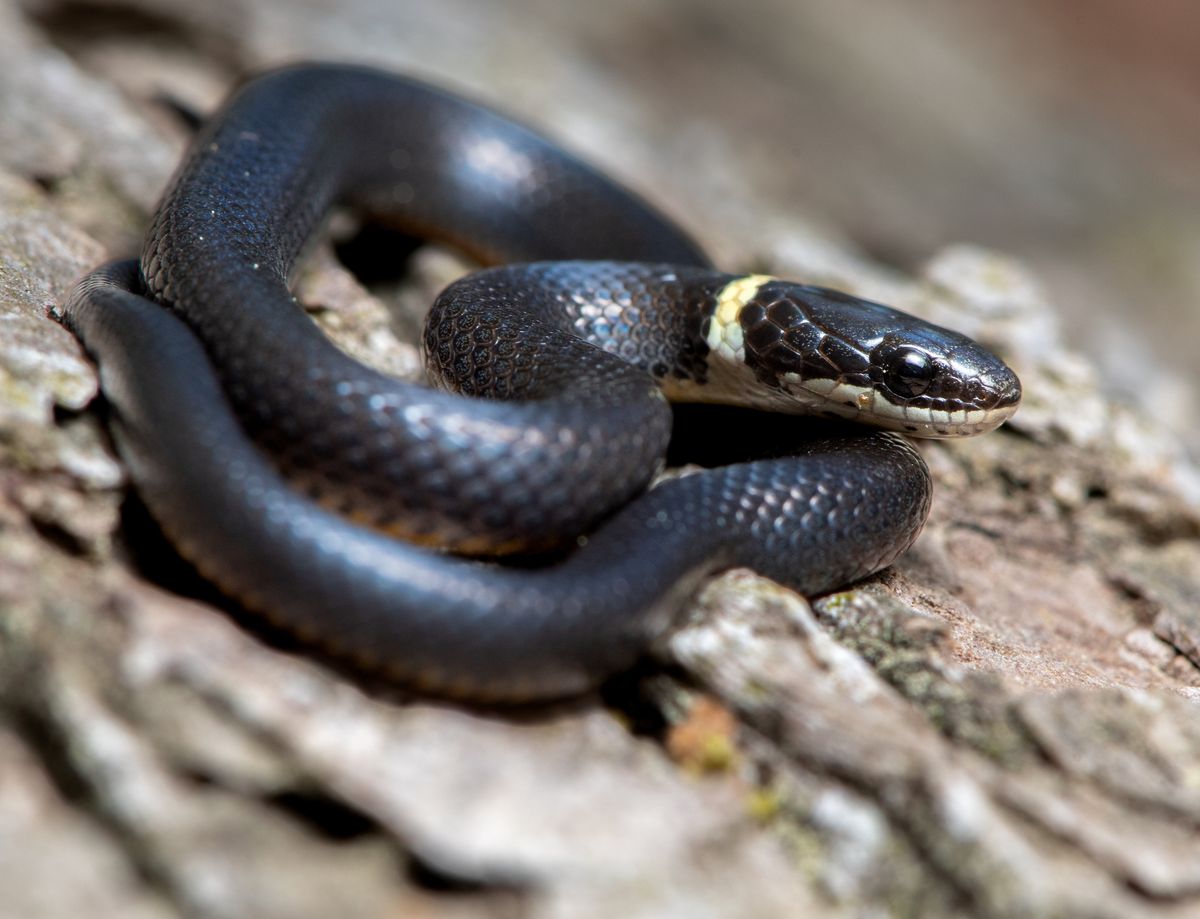
The neck ring and belly color are the signature combination. Confirm both when you can; a dark small snake without a clear ring may be something else.
These are the North Carolina snakes people most often confuse with Ring-necked Snake. Compare several traits; a single cue is rarely enough.
Red-bellied snakes are also small and can show a warm belly, but they usually lack the bold light neck ring and often have faint dorsal stripes or a lighter neck area without a clean ring.
Dekay’s brownsnakes are tan to brown with darker spotting or a pale dorsal stripe, not a blackish body with a bright ring. Belly is lighter but not the ring-neck’s vivid yellow-orange.
Wormsnakes are plain brown above with a pink belly and no neck ring. They look more like a polished earthworm than a ring-necked snake.
Ring-necked snakes spend much of their time under rocks, logs, bark, and other cover, hunting small amphibians, earthworms, and soft-bodied prey.
They may appear after rain or on humid evenings when cover is damp. A sudden appearance on a trail often means the snake was already under nearby leaf litter.
If threatened they may coil, hide the head, and curl the tail to show the bright underside—an unexpected flash of color rather than a bluff strike like a watersnake.
Statewide in suitable moist woodland and rocky habitat. Think less about open water and more about humid cover: forest floors, talus edges, and yards that still have logs or stone.
Regional maps show broad physiographic provinces, not county-level records.
Use the gallery to check pattern, body shape, and context—not just overall color.